

Can a single tweet really impact an entire business?
At first glance, it sounds unlikely. However, in today’s digital world, public perception can shift almost instantly—and companies that fail to meet expectations are especially vulnerable.
OLA EV is a compelling example of this dynamic. Once seen as a disruptor in India’s electric vehicle market, the company experienced rapid success followed by a steep decline. This article explores OLA EV’s journey, with a focus on how product quality issues ultimately eroded trust and investor confidence.
OLA’s Vision and Market Debut
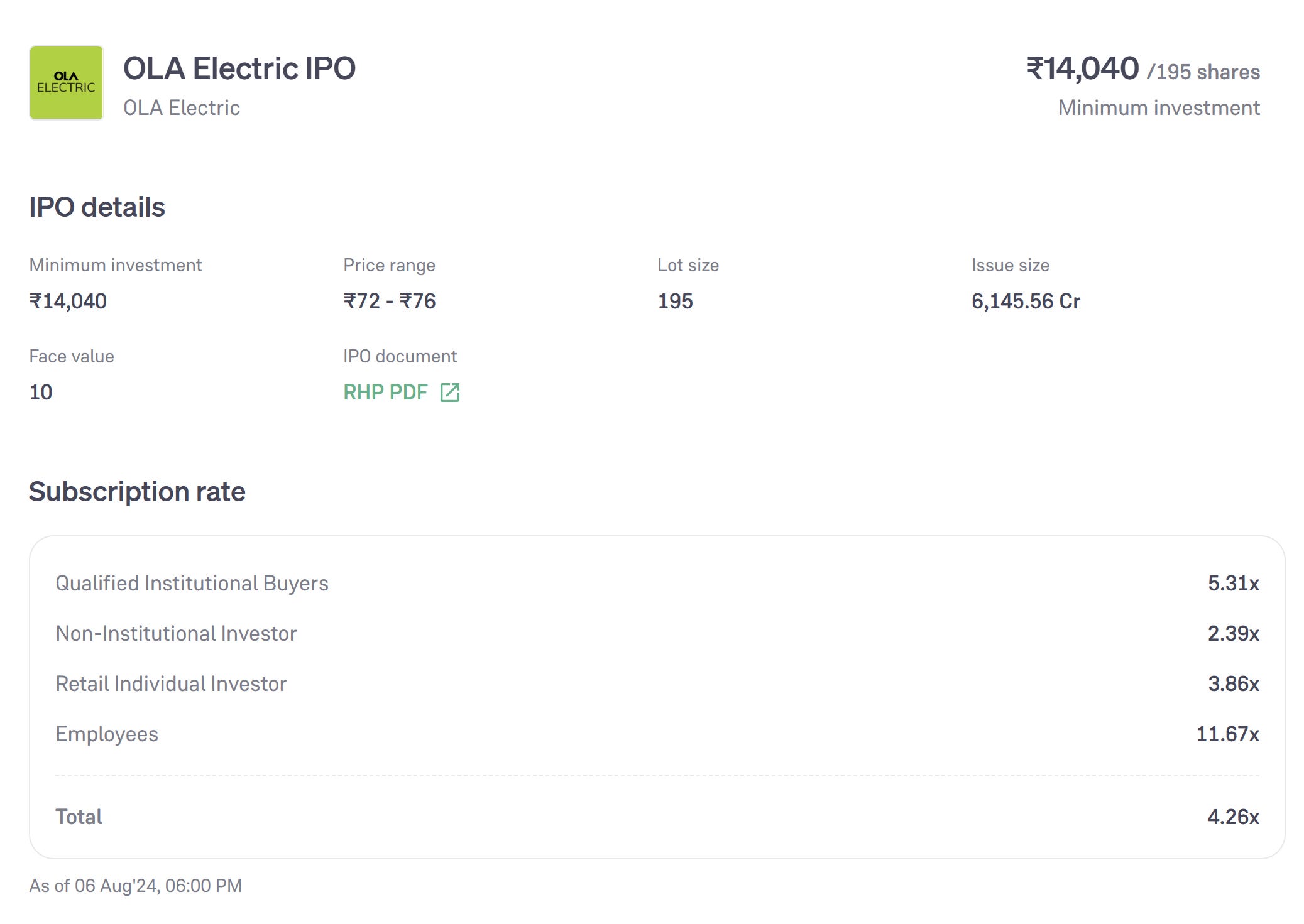
In 2024, OLA made a high-profile entry into the Indian stock market with its IPO, listing at approximately INR 78 per share. The launch generated significant excitement among investors and industry observers.
Like many others, I participated in the IPO, encouraged by the strong market sentiment and the company’s ambitious vision to lead India’s EV revolution.
The Rapid Rise
In its early days as a public company, OLA EV appeared unstoppable. Within just a week of listing, the stock price doubled—reinforcing investor confidence and market optimism.
The prevailing belief was that OLA would redefine the Indian EV market. Buoyed by this momentum, I increased my investment, confident in the company’s future.
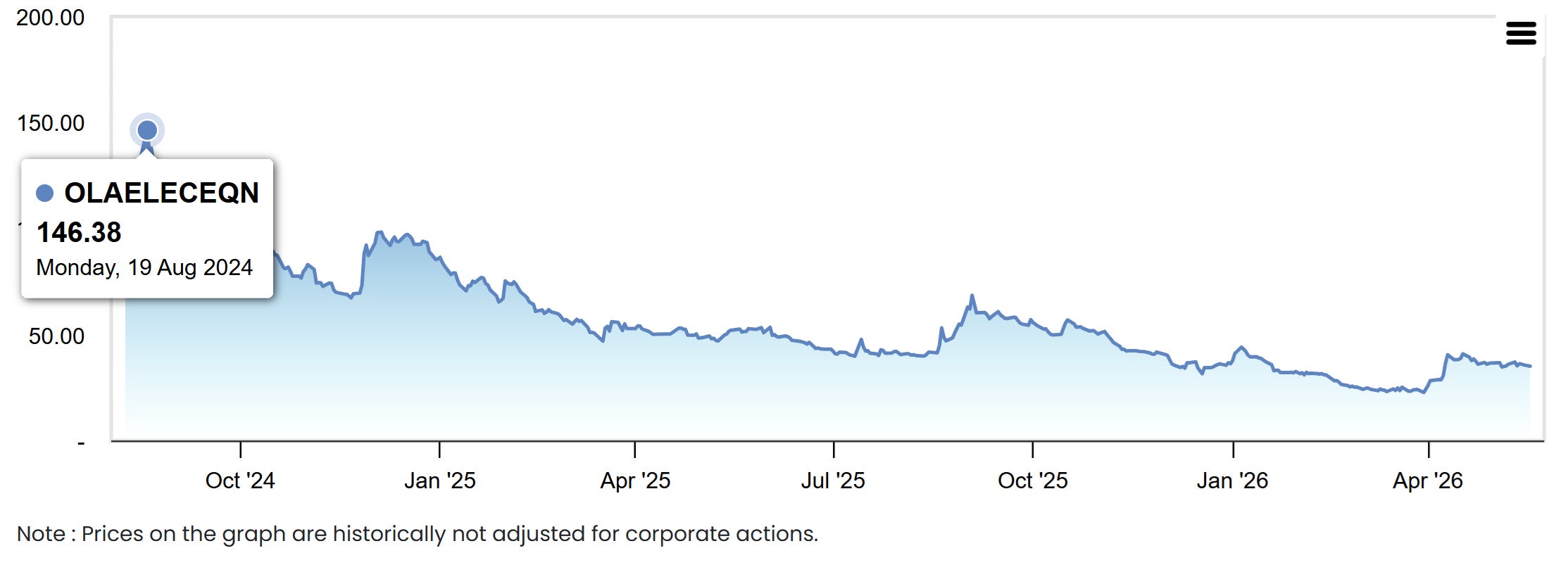
This period felt like a “honeymoon phase,” where growth seemed inevitable and risks were largely overlooked.
The Turning Point: Product Concerns Go Public
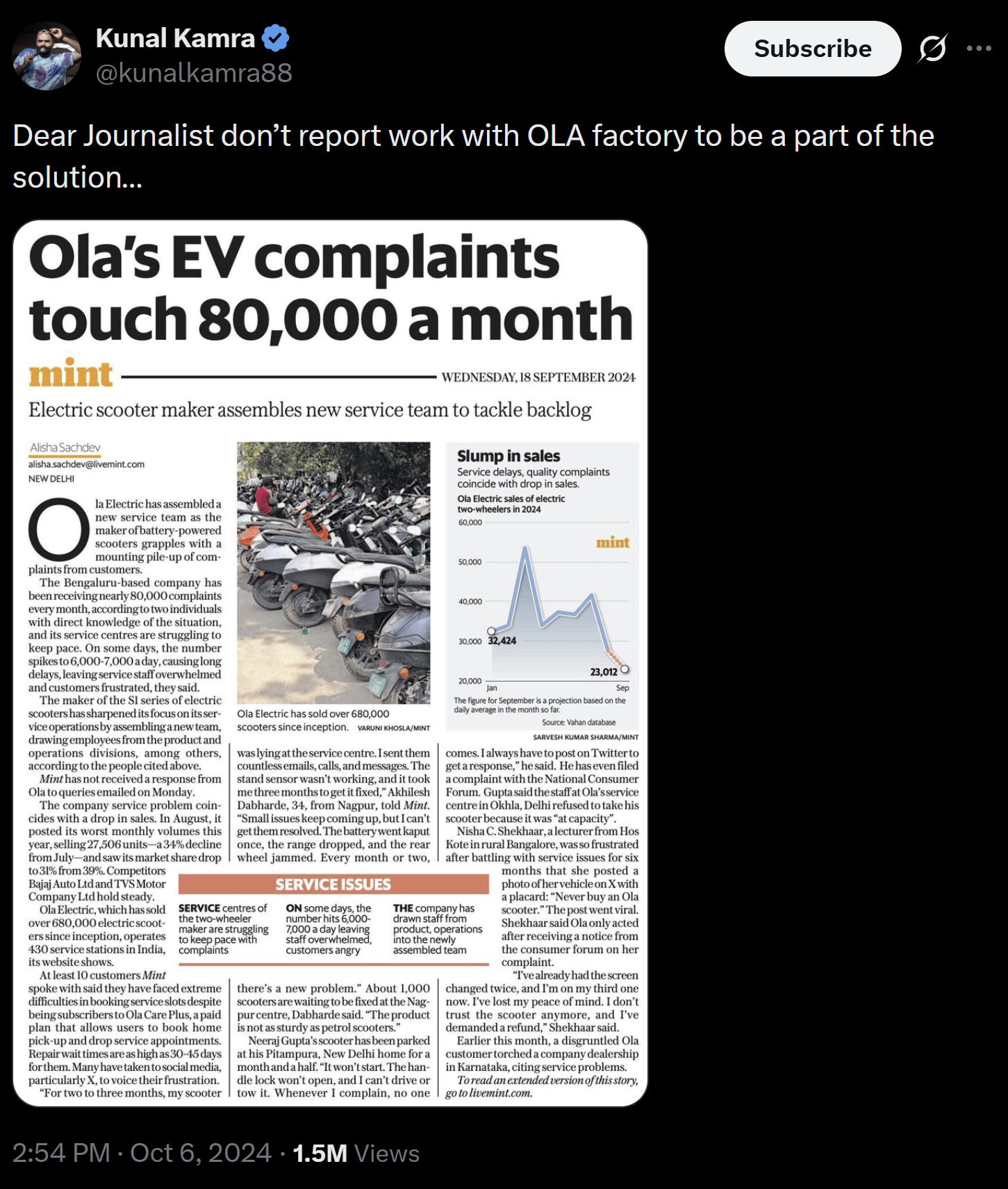
The narrative began to shift when a viral tweet by a well-known public figure highlighted issue with OLA EV’s products. While the tweet itself was brief, its impact was immediate and far-reaching.
Soon after, OLA’s stock price began to decline.
What initially seemed like a temporary reaction turned into a sustained downward trend. This prompted a deeper look into the company’s fundamentals.
Underlying Issues: Product Quality and Customer Experience
As concerns surfaced, it became clear that the issue was not the tweet itself—but what it exposed.
Customers had been experiencing ongoing problems, including:
Inconsistent product quality
Poor service center responsiveness
Charging-related issues
Safety concerns, including reports of vehicle fires
These issues indicated a gap between OLA’s market promise and its product reality. More importantly, the company struggled to respond effectively to customer feedback.
The Fall
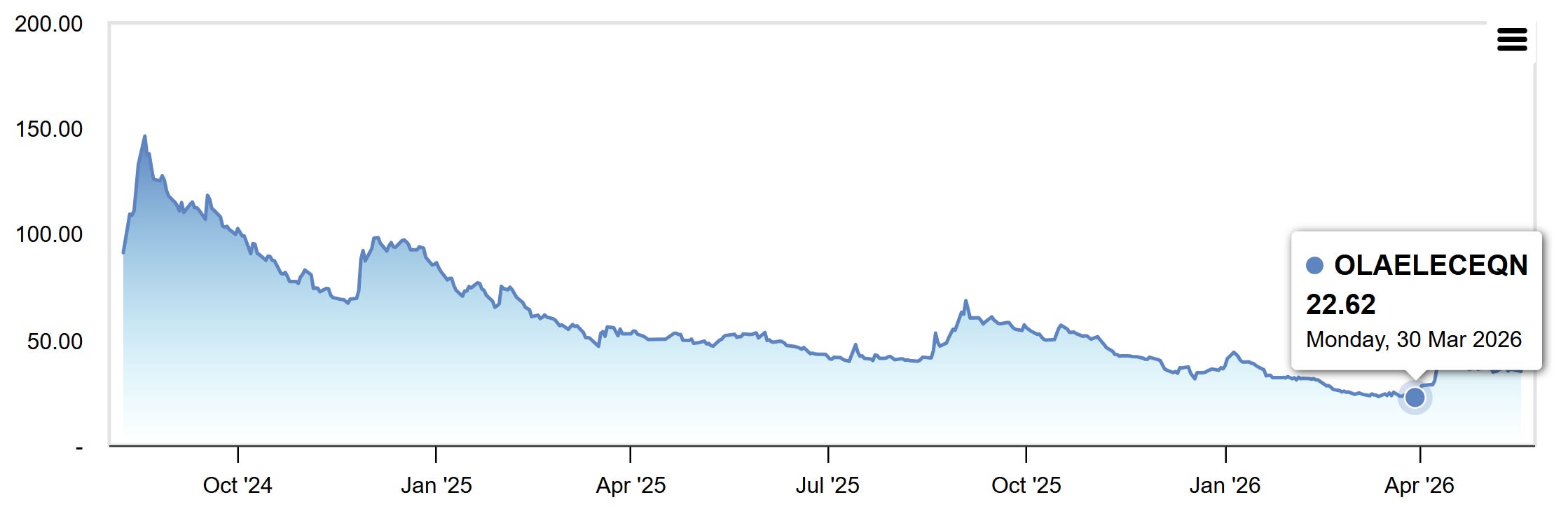
Within a year, OLA EV’s stock price dropped significantly—from its peak to approximately INR 22.62 by March 2026.
Despite early promise, the company has not yet seen a meaningful recovery.
The decline reflects not just market sentiment, but a broader loss of customer trust.
The Bigger Lesson
OLA EV’s story highlights a critical business truth:
You can create excitement, generate buzz, and achieve rapid growth—but long-term success depends on delivering consistent value.
At the core of this value is product quality.
When basic customer expectations are not met, even a small trigger—like a viral tweet—can accelerate a company’s decline by exposing deeper issues.
Key Takeaways for Product Managers and Founders
Product quality is non-negotiable
It is the foundation of trust and long-term success.Customer feedback must be taken seriously
Ignoring early signals can amplify future problems.Growth cannot outpace product maturity
Scaling a flawed product only magnifies its weaknesses.Reputation is fragile in the digital era
Public perception can shift quickly and dramatically.
Conclusion
OLA EV’s journey serves as a valuable lesson for anyone building or managing products.
Speed, marketing, and hype can help you enter the market—but they cannot sustain you. Without a strong product foundation, long-term success is unlikely.
This experience also reinforced a personal lesson for me as an investor: overlooking fundamentals can lead to significant—and sometimes unrecoverable—losses.